title: How to specify a cell thawing system: 7 specs that decide the quote slug: cell-thawing-system-selection category: Application Notes tags: thawing, selection, procurement, specifications excerpt: The seven specifications that change a thawing system quotation – channels, container range, temperature guard, residual-ice control, access control, records and power – and what to send a supplier to get a usable answer. description: Seven specs that decide a cell thawing system quote: channels, container range, temperature guard, ice target, access control, records, power. date: 2026-10-22 status: draft
Most thawing-system quotations are vague because the enquiry was vague. A supplier receives "we need a cell thawer for our lab" and replies with a brochure and a range of prices, and the buyer cannot tell which number applies.
The fix is to specify seven things up front. Each one moves the price, and each one has a wrong answer that only shows up six months after installation.
1. Channels, not throughput
"Four samples per run" and "four channels" are not the same claim. Channels are independently controlled positions; throughput depends on cycle time and how the operator loads them.
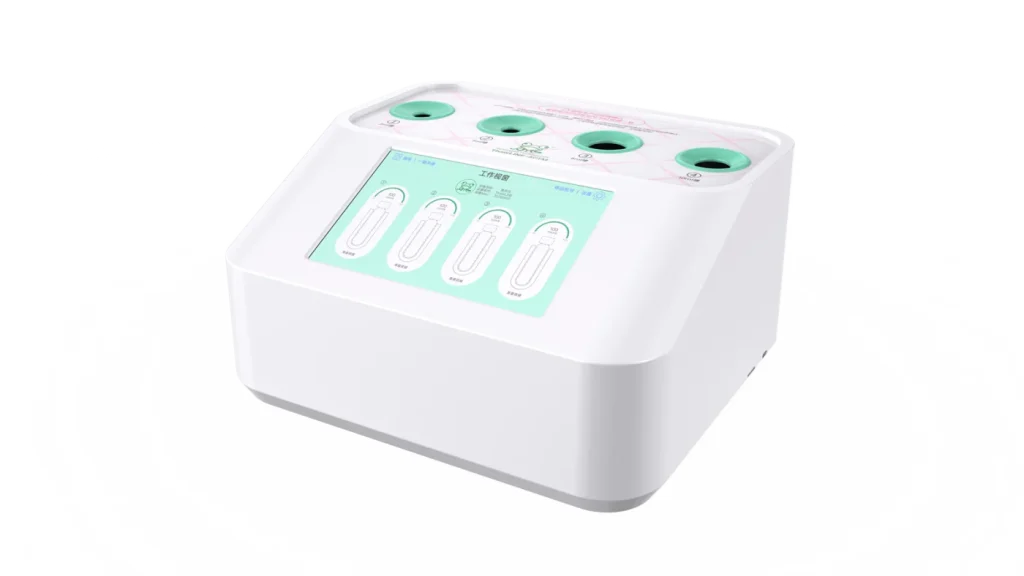
On a four-channel tube instrument, a run is 2–8 minutes per channel depending on container and target parameters, and channels can be started independently. If your weekly volume is 40 tubes, four channels is plenty. If it is 400, the constraint is operator time, not channel count — and that is a different conversation.
Ask for: cycle time at your container volume, and whether channels can run overlapping cycles.
2. Container range — the spec that quietly excludes your samples
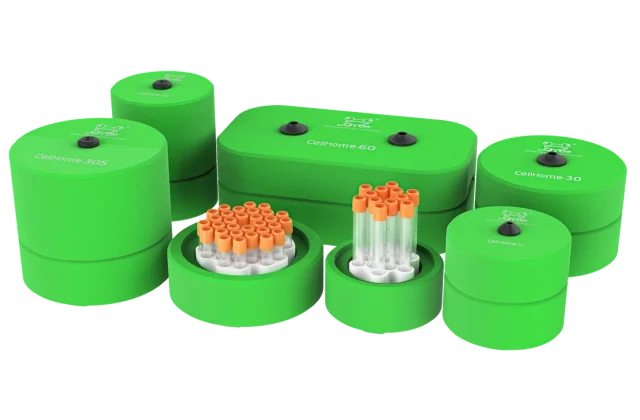
Thawing is a thermal-contact problem. A slot shaped for a 2 ml cryovial does not hold a 50 ml cryobag correctly, and an adapter that "fits" is not the same as a validated fit.
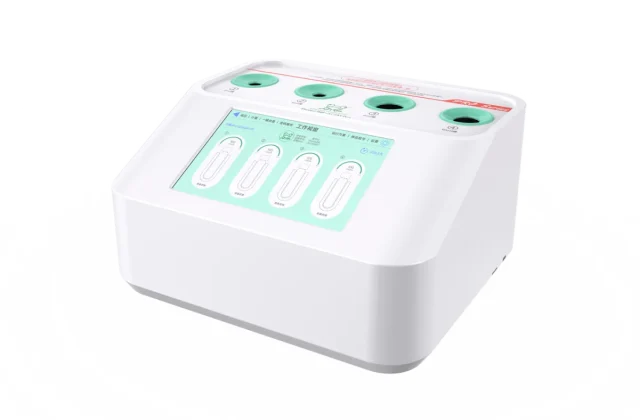
Two tube models carry different numbers, and quotations often blur them. The base ThawLINE takes 1.5–5 ml cryotubes and runs 2–8 minutes per channel with two access levels. The Pro version uses four 2 ml slots for 0.5–1.8 ml samples, finishes in ≤3 minutes, and adds three access levels plus a printed report. "Tube thawer" is therefore not one specification. The bag systems use capacity selections for different bag volumes — on ThawWaker the four ranges are ≤50, 50–100, 100–200 and ≥200 ml — because the heated lid has to close on the actual fill volume to keep contact consistent.
Ask for: the exact container list, and whether custom ports are a paid option or a standard variant.
3. Temperature guard
The guard is a refusal condition: if the sample arrives warmer than the configured limit, the run does not start. On Kemesser instruments the protection temperature is configurable from -40 °C to 0 °C.
This matters for two reasons. First, it catches samples that sat on the bench too long, which is one of the most common causes of unexplained viability loss. Second, it gives an auditor a documented control rather than an operator’s judgement.
Ask for: the configurable range and what the instrument does when the condition is met (alarm only, or hard refusal).
4. Residual-ice target
Thawing stops before the sample is fully liquid. The manuals for these instruments put the recommended band at 5 %–15 % residual ice.
The specification question is not "what is the number" but "can I set it, and is it recorded per run". A fixed target is fine for a research lab; a configurable, recorded target is what a regulated process needs, because the value becomes part of the batch record.
Ask for: whether the target is adjustable, and whether the achieved value appears in the run record.
5. Access control
Two levels (administrator, operator) cover most labs: an administrator sets the protocol, operators run samples. Three levels add a supervisor tier that can create run protocols and unlock accounts, which is what separates "who configured it" from "who ran it".
If your quality system requires password expiry, ask whether it can be enforced and whether account recovery is possible without a factory reset.
Ask for: number of tiers, password policy options, and lockout behaviour.
6. Records
There are three different things people call "records", and quotations often conflate them:
- On-board storage — an SD card holding run curves, exportable to PC software.
- Printed report — a thermal printout generated when the sample is ejected. On the compliance-grade instruments this is a ten-field report with start, finish, duration and parameters.
- Editable or not — whether the exported curve can be altered. "Uneditable thaw-curve images" is a meaningful phrase in a quotation; "data export" is not.
Ask for: a sample report and the field list.
7. Power, footprint and installation
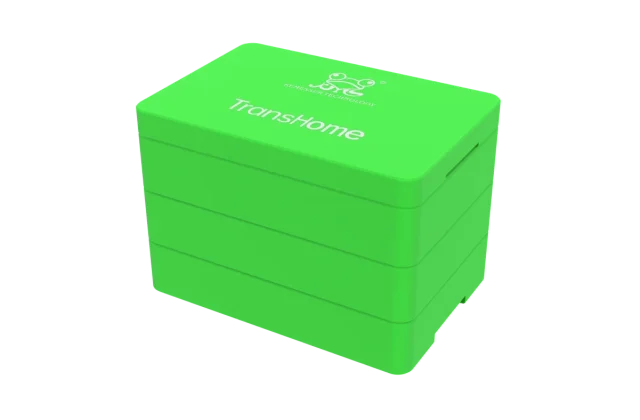
A 300 W instrument on a shared bench circuit is a different installation from a 120 W compact unit. The four-channel tube instrument is 323 × 288 × 168 mm and draws up to 300 W through a 12 V / 15 A adapter; the compact bag unit is 296 × 270 × 170 mm at 120 W; the bag system with the heated lid is 400 × 445 × 255 mm.
If the unit goes into a cleanroom or a cold room, say so before the quote — cable length, heat rejection and surface cleanability all change.
What to send a supplier
A single page with these seven answers gets a specific quotation instead of a range:
| Item | What to state |
|---|---|
| Container | type, volume, cap format, custom ports needed |
| Volume | samples per week, samples per run, peak day |
| Temperature | protection temperature, target, residual-ice band |
| Access | number of operators, password policy, tiers |
| Records | SD only, printout, or both; export format |
| Environment | bench, cleanroom, cold room; power available |
| Compliance | CE, internal validation package, or full IQ/OQ/PQ support |
Two more questions are worth asking even though they are not specifications: what the warranty covers (12 months standard on these instruments) and what the lead time is for a custom port.
Where the decision usually lands
If the work is research-scale and the thaw is not part of a regulated record, a compact single-slot or four-channel unit is the right size, and the thawing series overview shows the range side by side. If the thaw feeds a manufacturing record, the extra cost of the compliance-grade tube system buys stored protocols, three-tier access and printed reports — the things an audit asks for.
Either way, the specification work is the same seven questions. Answer them once and reuse the page for every supplier you approach.
Prefer to see every model side by side first? The full comparison table covers all twelve instruments with capacity, cycle time, access and footprint. If you send us those seven answers, we will reply with a parameter sheet rather than a catalogue: request a quote. For the method-level comparison behind the thawing step itself, the water bath vs dry thawing article covers the six differences that matter in practice.