title: A one-page cell thawing SOP you can adapt (with record fields) slug: thawing-sop-template category: Application Notes tags: SOP, thawing, documentation, training, compliance excerpt: A one-page thawing SOP template: purpose, responsibilities, equipment settings, the six-step procedure, the five numbers to record, deviation rules and requalification. Copy it, replace the brackets, and it is ready for review. description: One-page cell thawing SOP template with equipment settings, six-step procedure, record fields, deviation handling and requalification rules. date: 2026-10-22 status: draft
Most thawing SOPs fail for one of two reasons: they are three pages long and nobody reads them, or they are one paragraph long and cannot be audited.
This template is deliberately one page. It assumes a dry thawing instrument with a configurable protection temperature and a residual-ice target, and it leaves the parts that depend on your product — dilution ratio, centrifugation, acceptance criteria — as bracketed fields for you to fill in.
The template
Title: Thawing of cryopreserved cells Document ID: [SOP-THW-001] Version: [1.0] Effective: [date] Owner: [Laboratory manager] Review cycle: [annual]
1. Purpose and scope
This SOP describes the thawing of cryopreserved cells in [cryovials / cryobags] using [instrument model], from removal from storage to resuspension before [assay / culture / manufacturing step]. It applies to all operators who perform thawing.
2. Responsibilities
| Role | Responsibility |
|---|---|
| Laboratory manager | Approves the SOP, approves parameter changes |
| Supervisor | Sets and stores run protocols, trains operators, reviews deviations |
| Operator | Performs the thaw, completes the record, reports deviations |
3. Equipment and settings
| Item | Setting |
|---|---|
| Instrument | [model, asset ID] |
| Protection temperature | [-40 °C to 0 °C, state the value used] |
| Residual-ice target | [state the value; the recommended band is 5 %–15 %] |
| Pre-heat | [6–10 min for compact units; confirm ready state] |
| Container | [cryovial 1.5–5 ml / 50 ml bag / 2 ml Pro slot] |
| Diluent | [medium, temperature 37 °C] |
| Centrifuge | [g-force, time, temperature] |
Settings are stored as a named protocol where the instrument supports it. Operators recall the protocol; they do not type parameters.
4. Procedure
| Step | Action | Acceptance |
|---|---|---|
| 1 | Confirm the instrument is at ready state and the protocol is the approved one | Ready indicator on |
| 2 | Remove the sample from LN₂ or -80 °C and transfer directly to the slot | No bench hold |
| 3 | Start the run and record the start time | Run accepted, no guard alarm |
| 4 | Remove at completion (residual ice visible, not fully liquid) | Sample not fully melted |
| 5 | Add diluent dropwise at the validated ratio | Within 1–2 min of removal |
| 6 | Centrifuge and resuspend per [SOP-CEN-002] | Pellet resuspends cleanly |
| 7 | Count and record viability | [acceptance criterion] |
5. Records
For every thaw, record five numbers:
- time out of storage;
- time into the instrument;
- run duration;
- time from removal to dilution;
- viability at count, with the method used.
Where the instrument produces a report (for example the ten-field printout on ThawLINE Pro and ThawWaker), attach it to the batch record and keep the SD export as the primary copy. Thermal paper fades; the digital file does not.
6. Deviations
| Event | Action |
|---|---|
| Instrument refuses to start (sample above protection temperature) | Do not override; record the input temperature and notify the supervisor |
| Run ends early or late | Record actual duration; assess the sample before use |
| Sample left in the slot (alarm) | Record the delay; assess viability before release |
| Power interruption | Record the interruption; assess the sample; do not resume a partial run |
| Temperature excursion in storage | Record; quarantine the sample pending assessment |
Deviations are recorded even when the sample is still usable. The record is what makes the decision auditable.
7. Training and requalification
- Operators are trained against this SOP and signed off before first independent use.
- Retraining after any parameter change or deviation trend.
- Requalification of the instrument after service, relocation, or a change of container type — not annually by default.
- The 5 %–15 % residual-ice band and the protection temperature range are confirmed against the current manual at each review.
Why these particular fields
The five record numbers are chosen so that a failure can be traced without guessing. If viability drops, the numbers point to a step:
- time out of storage → bench hold problem;
- run duration → instrument or parameter problem;
- time to dilution → DMSO exposure problem;
- viability → outcome.
A record with only the date and "thawed OK" cannot support any of those conclusions. It also cannot support an investigation, which is what an auditor is actually testing.
Common audit findings against this SOP
- Settings not written down. The protocol exists in the instrument but not in the document.
- Record fields blank. Operators sign the sheet without the five numbers.
- Deviations not recorded. A refused run is treated as a non-event.
- Requalification missing after service. The instrument was repaired and put back into use without a check.
- Training records out of date. New operators trained informally.
Each of these is a document fix, not an equipment purchase. The validation note covers the IQ/OQ/PQ side if you need the instrument qualified as well.
Where the settings come from
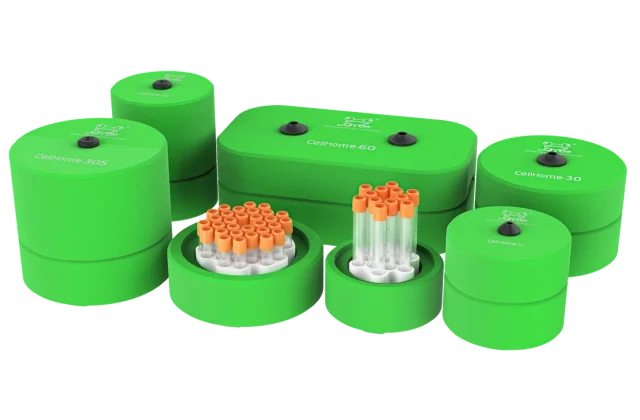
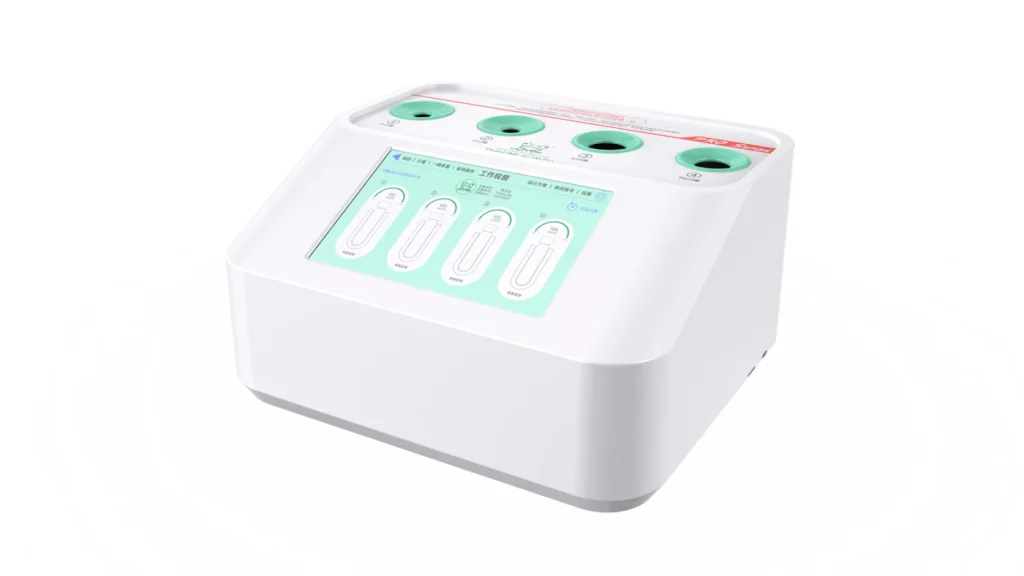
The parameter ranges in this template — protection temperature -40 °C to 0 °C, residual ice 5 %–15 %, pre-heat 6–10 minutes on compact units — are the values stated in Kemesser’s English documentation. The instrument model decides which apply: ThawLINE Pro runs four 2 ml slots at up to 3 minutes with three access levels, ThawLINE runs 2–8 minutes with two, and ThawHome units are dry and alarmed but carry no account or record structure.
If you want the template checked against the instrument you actually run, send us the model and container and we will return an annotated version. For the process rationale behind the steps, the PBMC thawing protocol and the CAR-T thawing protocol go through the same sequence in more detail.
<!– Facts: protection temperature -40~0 C, residual ice 5-15%, preheat 6-10 min, ThawLINE Pro 4×2 ml / <=3 min / three tiers, ThawLINE 2-8 min / two tiers, ThawHome no accounts or records, ten-field printout on ThawLINE Pro and ThawWaker from English brochures and knowledge base entity pages (2026-10-22). –>