title: Shipping biological samples on dry ice: UN1845, IATA and the UN38.3 confusion slug: un383-dry-ice-shipping category: Application Notes tags: dry ice, UN1845, UN38.3, shipping, cold chain excerpt: Dry ice shipments are declared as UN1845, not UN38.3 – that number belongs to lithium batteries. What to pack, label and declare, how much dry ice a 15 L box holds, and where the two rules meet. description: Dry ice shipping for biological samples: UN1845 and IATA rules, labelling, dry ice quantity, and when UN38.3 applies to battery-powered equipment. date: 2026-10-22 status: draft
Two numbers get mixed up in almost every cold-chain enquiry: UN1845 and UN38.3.
UN1845 is dry ice. UN38.3 is the test standard for lithium batteries. A shipment of frozen samples on dry ice is declared as UN1845; a battery-powered instrument travelling by air needs UN38.3 evidence for the battery. If a supplier sends you a "UN38.3 certificate" for a plain dry-ice box, the document does not apply to the box.
Getting this right matters because the paperwork differs, and because customs or a carrier can stop a shipment for the wrong declaration even when the packaging is perfect.
What dry ice shipping actually requires
| Item | Requirement | Who provides it |
|---|---|---|
| UN number | UN1845, dry ice, class 9 | Shipper’s declaration |
| Packing instruction | IATA PI 954 (air) | Carrier / DGR |
| Quantity limits | Typically 2.5 kg per package on passenger aircraft, higher on cargo aircraft — confirm the current DGR for your route | Carrier |
| Marking | "Dry ice" or "Carbon dioxide, solid", UN1845, net quantity in kg | Shipper |
| Packaging | Vented: CO₂ sublimes and must escape | Shipper |
| Documentation | Air waybill entry, shipper’s declaration where required | Shipper |
The quantity limit is the item that catches people out. It is per package, not per shipment, and it differs between passenger and cargo aircraft. Check the current edition of the DGR rather than relying on a number from an old SOP.
Why the box must vent
Dry ice sublimes at about -78 °C, turning from solid to gas without a liquid stage. In a sealed container that gas builds pressure. A shipping box therefore needs a vent path, and the inner packaging must not be airtight either.
This is also why the box is not simply "a cooler". Vented, insulated, and sized so that the sample compartment stays below the target for the whole transit time — those three requirements define the design.
How much dry ice a 15 L box holds
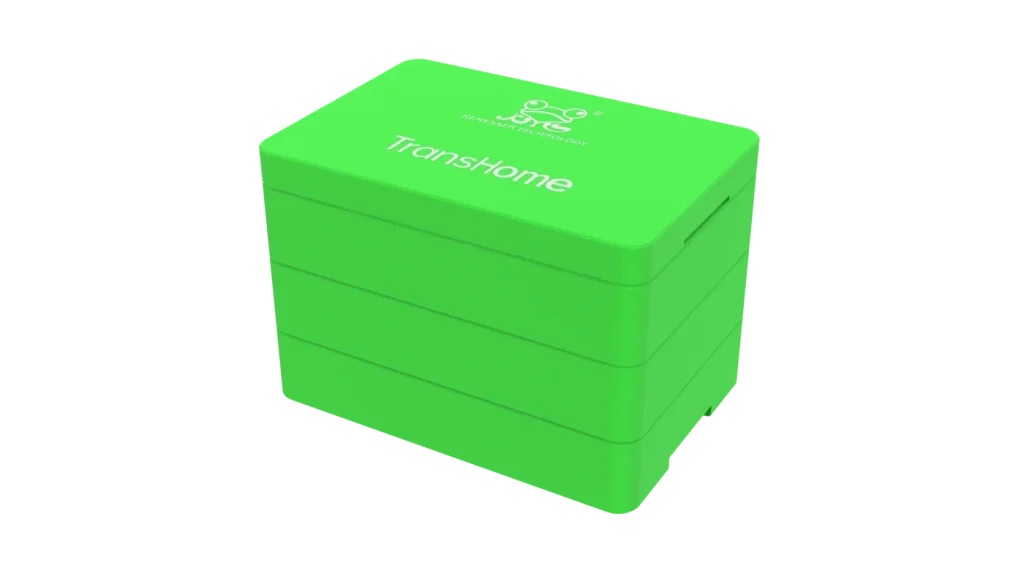
A dry-ice box rated at 15 L holds 15 litres of dry ice, not 15 kg of samples. The box itself — 530 × 360 × 365 mm outside, 330 × 160 × 295 mm inside, 4 kg empty — leaves an inner compartment for the samples that is separate from the ice.
Two practical planning rules:
- Fill the ice space, not the sample space. Partial fills sublime faster because there is more air to cool.
- Plan for re-icing on long routes. A box that can be opened and topped up in transit turns a 48-hour route into a manageable one; a sealed expanded-polystyrene shipper cannot be topped up.
Sizing the dry ice for a 72-hour shipment is arithmetic, not guesswork: estimate the sublimation rate for the box in your ambient conditions, multiply by the hours, add a margin, and confirm the sample compartment temperature with a data logger on the first shipment.
Where UN38.3 actually applies
UN38.3 applies to lithium cells and batteries shipped by air, including batteries built into equipment. If your shipment includes:
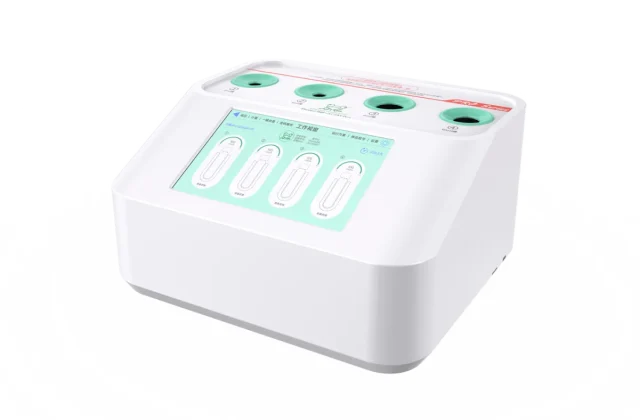
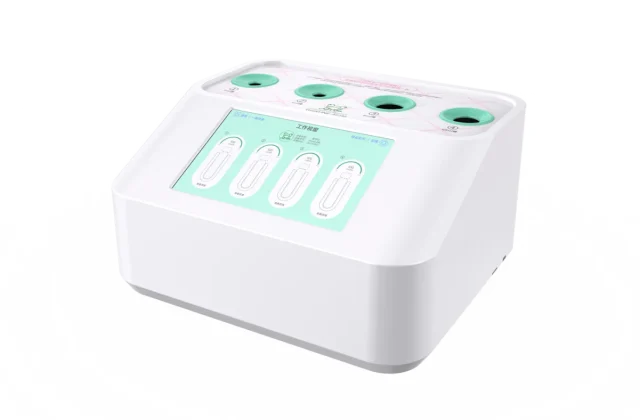
- a battery-powered thawing instrument (MobiThaw runs on a built-in battery and charges over USB Type-C at 60 W max);
- data loggers with lithium cells;
- a powered shipper with a battery backup;
then the battery needs UN38.3 test evidence, and the shipment may need to be declared as dangerous goods depending on the battery type and quantity. That is a separate declaration from the dry ice.
For a passive dry-ice box with no battery, UN38.3 does not apply. Ask for the document that matches the item you are shipping.
A packing sequence that works
- Pre-cool the box with a small amount of dry ice for 15–30 minutes before loading.
- Load the ice around the sample compartment, not on top of the samples.
- Place the samples in the inner compartment, with a temperature logger at the sample position, not in the ice.
- Close and mark the box: UN1845, dry ice, net quantity.
- Record the time of packing, the ice weight, the route and the expected duration.
- Receive and check the logger on arrival, and keep the trace with the shipment record.
Step 3 is where shipments fail quietly: a logger sitting next to the ice shows -70 °C for the whole trip and tells you nothing about the sample.
The equipment side of cold-chain shipping
For sample transfer at -78 °C, a passive box such as TransHome covers 15 L of dry ice with a 4 kg empty weight and doubles as mobile ultra-cold storage at the bench. For instruments, the battery question is the one to ask before booking: the MobiThaw is designed as a portable unit, so its battery documentation is part of the shipping file, while bench units that run from a mains adapter are not.
If you are setting up a shipment SOP, the post-thaw troubleshooting table shows where a cold-chain excursion usually shows up first.
Documents to keep with the shipment
- shipper’s declaration and air waybill entry (UN1845, quantity);
- packing list with the dry-ice weight;
- temperature logger trace, downloaded and stored;
- for battery equipment, the UN38.3 summary and the battery declaration;
- any import permit required by the destination country for biological material.
None of these is difficult. The failures come from using the wrong number, under-filling the ice, or logging the ice instead of the sample.
If you are preparing a route and want the box dimensions and ice capacity checked against your transit time, send us the details and we will come back with a packing plan rather than a brochure.
<!– Facts: TransHome 15 L dry ice, outer 530x360x365 mm, inner 330x160x295 mm, 4 kg empty from Cold Operation knowledge base entity page; MobiThaw 60 W Type-C battery from MobiThaw English brochure and entity page; UN1845 / IATA PI 954 / UN38.3 are regulatory facts, quantity limits deferred to the current DGR. –>