When a thaw underperforms, the first instinct is to blame the freezing step, because that is where the ice formed. In practice the ranking is different: most failures are decided in the last two minutes of the thaw or the first ten minutes after it.
This is the order we would actually check, from most to least likely, with the observation that distinguishes each cause.
The table
| # | Cause | What you see | How to confirm | Fix |
|---|---|---|---|---|
| 1 | Dilution started late | Viability low but counts normal; cells look "shrunken" | Time from removal to first diluent drop | Dilute within 1–2 min of removal; assign one person to the step |
| 2 | Thaw ran past the end point | Sample fully liquid, warm to the touch | Residual-ice target setting and run duration | Set 5 %–15 % residual ice and stop there |
| 3 | Bench hold before thawing | Uneven results between vials in the same batch | Time from freezer to slot | Move directly from LN₂ or dry ice; no bench hold |
| 4 | DMSO concentration or exposure | Viability falls with longer handling, not with freezing | Cryoprotectant recipe and post-thaw wash timing | Confirm the recipe; remove DMSO on schedule |
| 5 | Centrifugation too hard | Pellet tight, resuspension difficult, debris in count | g-force and time versus SOP | Reduce g-force or time; keep the centrifuge cold |
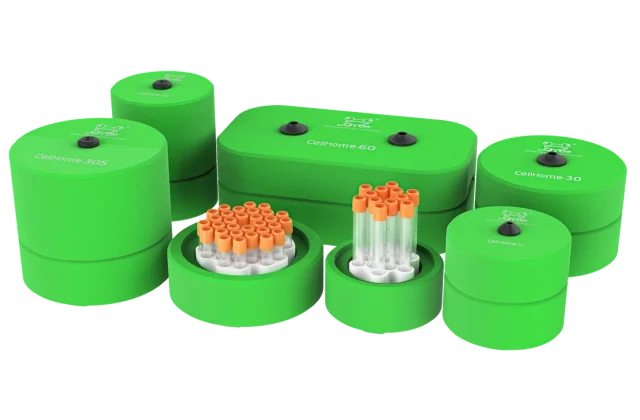
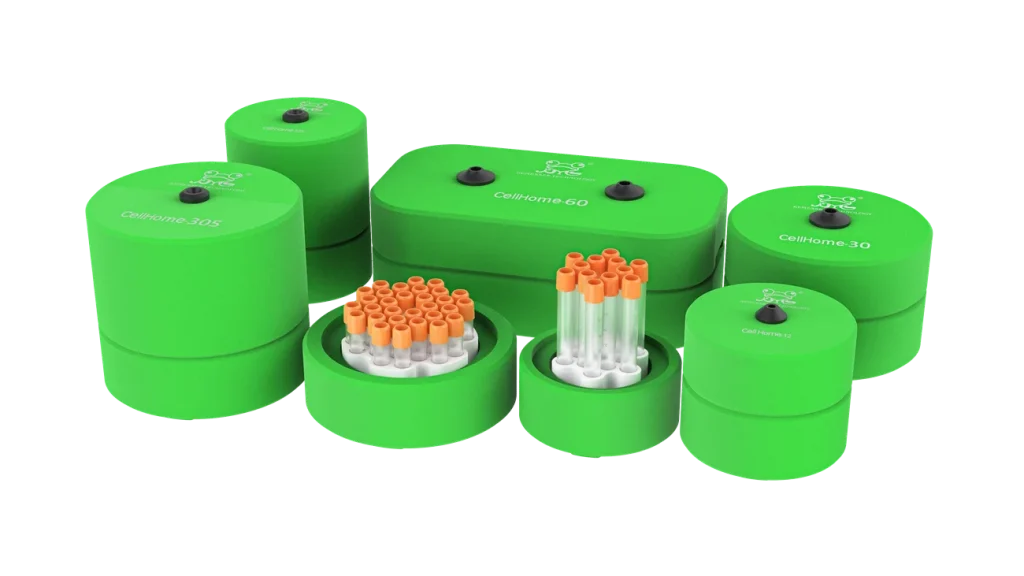
| 6 | Freezing rate not controlled | Batch-to-batch variation, worse with larger volumes | Freezing method (passive box, controlled-rate freezer) | Use a validated −1 °C/min method such as CellHome |
| 7 | Over-concentrated freezing | Clumping, poor recovery in high-density vials | Cells per ml at freezing | Freeze within the validated density range |
| 8 | Warm sample loaded | Run refused, or a flag in the log | Protection temperature alarm history | Enable the temperature guard; do not override it |
| 9 | Medium or serum batch change | Drop coincides with a reagent lot change | Compare lot numbers across batches | Re-qualify the lot before blaming the thaw |
| 10 | Contamination | Turbidity, pH shift, unexpected growth | Sterility check, water-bath or incubator swab | Remove the water contact; log sanitisation |
The three buckets behind the table
It helps to sort the ten causes into three groups, because they are fixed by different people.
Before freezing. Items 6, 7 and 9 belong to the freezing protocol and the reagents. If the same cells, frozen the same way, thaw badly only sometimes, this bucket is usually not the cause. If they thaw badly consistently, start here.
During the thaw. Items 2, 3, 8 and 10 belong to the two minutes in the instrument and the handling around it. These produce the pattern people describe as "the thaw is unreliable" — same cells, same operator, different result.
After the thaw. Items 1, 4 and 5 belong to dilution and centrifugation. These are the most common and the cheapest to fix, and they are also the ones a new operator is most likely to change without telling anyone.
What the instrument can and cannot fix
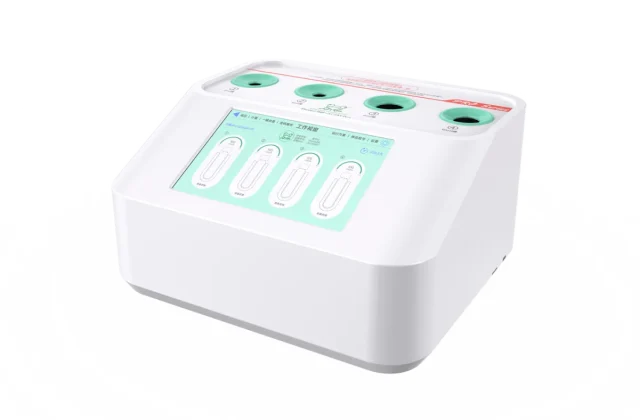
A dry thawing instrument with a configurable protection temperature and a residual-ice target removes causes 2, 3 and 8 almost entirely:
- the guard refuses a run when the sample is too warm (-40 °C to 0 °C range);
- the run ends at the set residual ice (5 %–15 % band);
- the log records what actually happened.
It does not fix dilution timing, DMSO exposure or centrifugation. Those are protocol decisions. If you buy an instrument expecting viability to improve without changing the SOP, the result is usually disappointment followed by a correctly written SOP.
Two secondary benefits are worth knowing. Ozone sanitising (a 30-second cycle on ThawLINE, ThawLINE Pro and ThawWaker) addresses cause 10 without a water bath. And a stored protocol removes the "same settings, different operator" drift that makes batch comparison meaningless.
Note that ThawHome units are dry and alarmed, but have no account structure, SD record or ozone cycle; if the thaw is part of a batch record, that difference decides which unit you need.
A five-line batch record that makes the table usable
For every thaw, write down five numbers:
- time out of the freezer;
- time into the instrument;
- run duration;
- time from removal to dilution;
- viability at count, with the method.
With five numbers per batch, the table above stops being a list of guesses. You will see which of the ten causes moves first, and usually it is the same one every time.
Where to start
If you have no record at all, start with causes 1 and 3 — they cost nothing to fix and account for a large share of "unexplained" losses. If the problem is consistent across batches, look at freezing rate and density, which is where a controlled-rate method such as CellHome changes the baseline.
If the problem only appears when several operators run samples, the fix is procedural: stored protocols and access control on a unit such as ThawLINE Pro, plus the five-line record.
For the method-level comparison that usually comes up next, the water bath vs dry thawing article covers contamination, repeatability and records. If you send us your numbers, we can tell you which row of the table they point to — request a quote and include the five values above.
<!– Facts: protection temperature -40~0 C, residual ice 5-15%, ozone 30 s on ThawLINE/ThawLINE Pro/ThawWaker and absent on ThawHome, CellHome -1 C/min from knowledge base entity pages and English brochures (2026-10-22); no specific viability percentages are claimed. –>