Mycoplasma contamination is discovered late, spreads quietly through a lab, and is expensive to clear. The water bath is one of the classic transfer routes, not because the bath is uniquely dirty, but because it is shared, wet and in contact with the outside of every vessel that goes into it.
This note looks at the pathway, what cleaning can realistically achieve, and where the risk can be designed out.
Why mycoplasma is different from other contaminants
Three properties make it a persistent problem:
- No cell wall. Many antibiotics that target cell-wall synthesis do nothing against it, so a contaminated culture can look healthy under standard antibiotic cover.
- No visible turbidity. Bacterial contamination usually turns the medium cloudy; mycoplasma does not.
- Slow detection. Culture-based detection can take days to weeks, and PCR detects DNA rather than proving viable organisms.
The practical consequence: by the time a culture shows a problem, the bath and several flasks may already be involved.
How a water bath transfers contamination
The pathway is mechanical, not mysterious:
| Step | What happens |
|---|---|
| 1 | Water in the bath carries organisms, including biofilm-associated populations on the inner surfaces |
| 2 | The outside of a tube or flask picks up water when it is placed in or removed from the bath |
| 3 | The operator wipes the vessel, or does not, and the outside remains wet |
| 4 | Water runs down toward the cap or the neck during handling |
| 5 | Organisms reach the culture at opening, or on the bench surface |
Two details matter. First, biofilm on the bath walls and corners is a reservoir that routine water changes do not remove. Second, splashing and condensation spread the reservoir beyond the water line.
What cleaning can and cannot do
Cleaning reduces the load; it does not eliminate the pathway.
- Frequent water changes lower the concentration but do not remove biofilm.
- Disinfectants vary in activity against mycoplasma and can corrode the bath; the concentration and contact time have to be followed.
- UV lamps in baths act on the water surface and circulating volume; they do not sterilise the walls, the corners or the objects placed in the bath.
- Filters help on recirculating units, but the object still touches unfiltered water at the interface.
The structural problem remains: the vessel is wet when it leaves the bath, and it is handled by a person who then opens it.
What removes the pathway
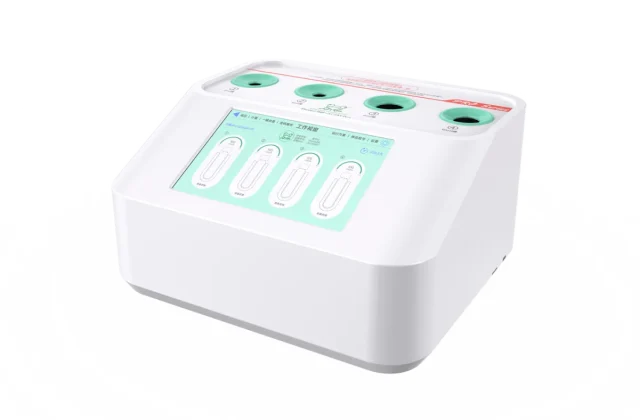
A dry thawing instrument removes water from the thaw step entirely. The tube or bag sits in a heated slot or under a heated lid; nothing is immersed, nothing is wet afterwards, and there is no shared water volume to colonise.
Three supporting details make the difference practical:
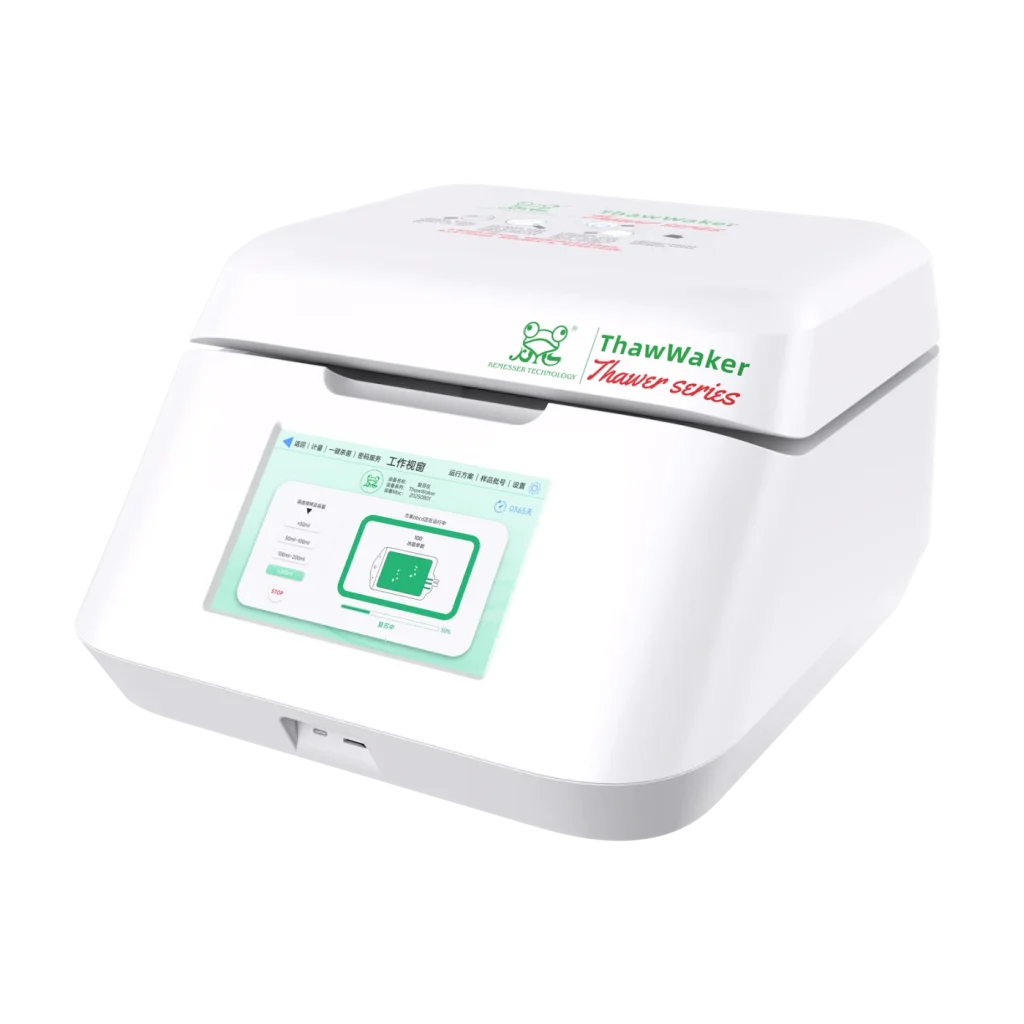
- Ozone sanitising between samples. On ThawLINE, ThawLINE Pro and ThawWaker a one-touch ozone cycle takes 30 seconds, so the chamber is treated between runs rather than once a week.
- No shared water to test or change. The routine maintenance that gets skipped in a busy lab — water changes, wall cleaning, disinfectant dosing — does not exist.
- Dry surfaces stay dry. Labels do not run, caps do not wick, and the outside of the vessel does not become a transfer surface.
What a dry instrument does not do is sterilise the sample or the operator’s technique. Contamination from hands, hoods and incubators remains a separate problem.
Comparing the options honestly
| Approach | Contamination route | Maintenance burden | Records |
|---|---|---|---|
| Shared water bath | Wet vessel interface, shared water, biofilm | Water changes, disinfectant, wall cleaning | Notebook |
| Bead bath | Dry beads, but shared contact surface | Bead replacement and cleaning | Notebook |
| Dry instrument | No water, no shared liquid | Wipe-down, ozone cycle | Run record where supported |
A bead bath removes the water but keeps a shared surface that has to be maintained. A dry instrument removes the shared liquid and gives a defined sanitisation step.
Detection and response, briefly
If contamination is suspected:
- Test the cultures, not only the bath — PCR or qPCR for screening, culture for confirmation of viability.
- Test the bath water and the bath walls, including a swab from a corner rather than only a water sample.
- Quarantine and trace: which flasks were opened near the bath, which operator, which day.
- Clear and re-test before returning the bath to service; a negative water sample with a positive wall swab is a common finding.
The tracing step is where a dry instrument helps for the future: with no shared water, the thaw is no longer a candidate pathway, and the investigation can focus on the hood and the incubator.
A migration path that does not disrupt the lab
Moving from a bath to dry thawing is usually done in one of two ways:
- Thaw step first. Move the thaw to a dry unit and keep the bath for other warming tasks, if any. This removes the highest-risk contact point with the smallest change to the SOP.
- Full replacement. Remove the bath entirely, which also removes the maintenance task and the wet-surface handling.
Either way, update the SOP to state the sanitisation step and the run parameters, and record them. The one-page thawing SOP is written for that transition.
What to look for in the equipment
- No water contact at any point — not just "less water".
- A defined sanitisation cycle with a stated duration (30 seconds on the ozone-equipped Kemesser models).
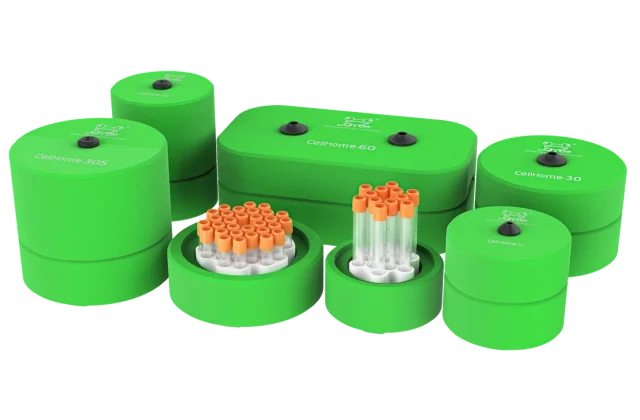
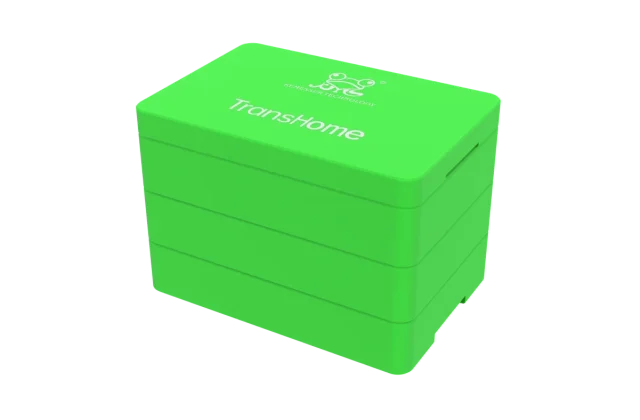
- A record if the thaw is part of a batch record; ThawLINE Pro adds three access levels and a printed report, while the compact ThawHome units are dry and alarmed but carry no account or record structure.
- Capacity that matches the vessel you actually thaw: 1.5–5 ml tubes, 2 ml Pro slots, or 30–450 ml bags on ThawWaker.
If you are investigating a contamination event and want the thaw step ruled out, send us the workflow and we will tell you which part of it a dry instrument can cover. The water bath vs dry thawing comparison covers the six practical differences beyond contamination.
<!– Facts: ozone 30 s on ThawLINE / ThawLINE Pro / ThawWaker; ThawHome dry with alarms, no account or record structure; ThawLINE Pro three tiers and printed report; ThawWaker 30-450 ml from English brochures and knowledge base entity pages (2026-10-22). Mycoplasma properties and detection limitations are general microbiology; no prevalence figures are claimed. –>