title: CE documentation for lab equipment imports: the 6-document checklist slug: ce-documentation-lab-equipment category: Application Notes tags: CE marking, compliance, import, documentation, procurement excerpt: What a CE-marked laboratory instrument should arrive with: the declaration of conformity, technical file evidence, test reports, labelling and EU representative details – and the six gaps that stop a shipment at customs or an audit. description: CE documentation checklist for lab equipment imports: DoC, technical file, test reports, labelling, EU representative and the gaps to check. date: 2026-10-22 status: draft
CE marking is often described as a certificate. It is not. For most laboratory equipment it is a manufacturer’s declaration that the product meets the applicable directives, backed by a technical file that has to exist before the mark is applied.
That distinction matters at two moments: when a shipment is held at customs, and when an auditor asks to see the file behind the mark on the nameplate. Both are document problems, not product problems.
The six documents that should exist
| # | Document | What it proves | Common failure |
|---|---|---|---|
| 1 | Declaration of Conformity (DoC) | The manufacturer names the directives, standards and product | Model numbers do not match the invoice |
| 2 | Technical file / construction file | The design basis and risk assessment exist | Missing, or only a brochure is offered |
| 3 | Test reports (EMC, LVD, RoHS as applicable) | The product was tested against the cited standards | Reports belong to a different model |
| 4 | Labels and markings | CE mark, manufacturer, model, serial, electrical rating | CE mark undersized or missing on the unit |
| 5 | Instructions and safety information | The user can install and use it safely, in the required language | English-only manual where local language is required |
| 6 | EU authorised representative details | Someone in the EU can be contacted about the product | No representative named outside the EU |
For a lab instrument the applicable directives are usually EMC and, where mains voltage is involved, the Low Voltage Directive, plus RoHS for electrical equipment. Which ones apply is the manufacturer’s call and has to be stated in the DoC — a DoC that lists no standards is a red flag.
What the DoC must actually contain
A usable declaration is short but specific:
- manufacturer name and address;
- product identification — type, model, and often serial ranges;
- the directives applied, by number;
- the harmonised standards used as the basis;
- a statement of sole responsibility;
- signature, name and position of the person authorised;
- place and date.
Two practical checks. First, compare the model designation on the DoC with the model on the invoice and on the nameplate — mismatches are the single most common reason a customs broker asks for more paperwork. Second, check that the DoC is signed by a named person, not stamped with a company seal only.
The technical file is not something you can request after the sale
The technical file is what the manufacturer keeps to justify the declaration. A buyer rarely receives the whole file, but you can ask for a summary: the risk assessment reference, the list of applied standards, and the test report numbers. If a supplier cannot describe what is in the file, the CE mark is a sticker rather than a claim.
For imports, the file also has to survive translation and retention rules. Keep the English version you received with the purchase record; if the local authority asks, a copy in the local language may be required.
The EU representative question
If the manufacturer is outside the EU, the product needs a named EU economic operator who can be contacted about compliance. That name and address should appear on the product, the packaging or the accompanying documents.
This is the item buyers forget until a distributor asks for it. Ask for it before the purchase order, not after the container arrives.
Labelling: small details that stop shipments
- CE mark size and position. It has to be visible, legible and on the unit itself — not only on the carton.
- Electrical rating. Voltage, current and power must match the adapter and the destination market. A 300 W instrument supplied with a 12 V / 15 A adapter and US, UK and EU plugs is straightforward; a unit with only one plug type is not.
- Serial number and model. Needed for traceability, warranty and, later, for service records.
- Language. Instructions must be in the language required by the destination market. This is a national rule, not a CE rule, and it varies.
How this maps to a purchase
A short pre-order checklist that avoids most delays:
- Ask for the DoC in PDF, signed, with the exact model.
- Ask which directives and standards are cited.
- Ask for test report numbers and the report date.
- Confirm the CE mark is on the unit and photograph the nameplate on arrival.
- Confirm the EU representative.
- Confirm the manual language and whether a local-language version is available.
None of this is exotic. It is the same six items every time, and the supplier either has them organised or has to assemble them under time pressure.
Where the product fits
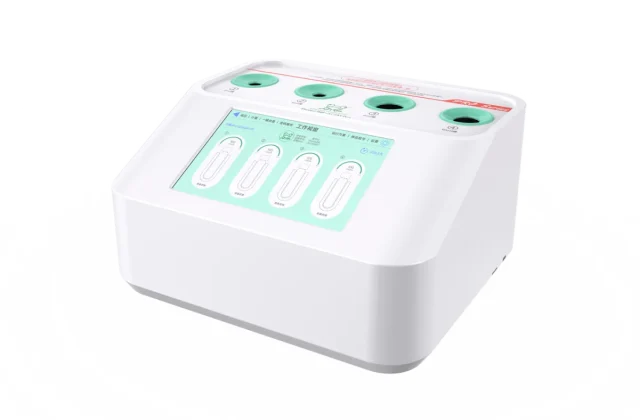
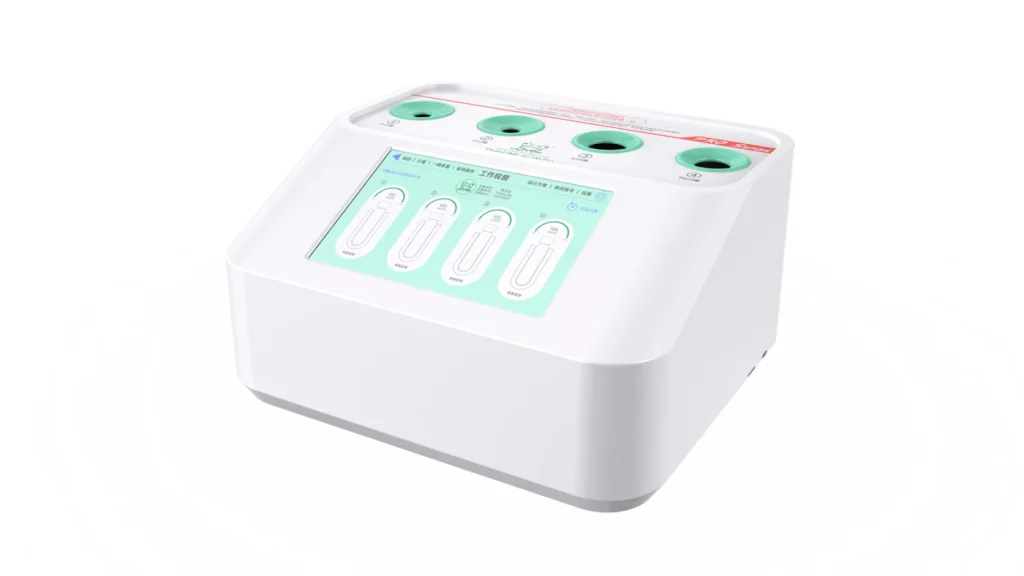
Kemesser instruments such as the ThawLINE Pro are CE marked, and the declaration, manual and nameplate carry the model, the electrical rating and the manufacturer details. Where a distributor needs the DoC matched to a specific model number before a tender, that can be requested with the quotation rather than after delivery.
The documents we can supply for a specific model are listed on the CE documents page. If you are preparing an import file for a lab instrument and want the document set checked against your market’s requirements, send us the model and destination and we will list what is available and what has to be produced locally. For the technical side of specifying the instrument itself, the seven-spec selection guide is the companion piece.
<!– Facts: CE marking, DoC content and technical file requirements are general regulatory practice for lab equipment (EMC/LVD/RoHS); Kemesser CE status and 300 W / 12 V 15 A adapter / US-UK-EU plugs from ThawLINE Pro-T2 English brochure and ThawLINE English manual; no specific certificate numbers or notified body claims are made. –>