DMSO is the most common cryoprotectant in cell banking, and it is also the reason a thaw has a deadline. At -80 °C it prevents ice damage. At 37 °C, in a liquid sample, it is a solvent that disrupts membranes and proteins — and the clock starts the moment the ice disappears.
Understanding that contradiction explains most of the "the cells looked fine when frozen" complaints.
Why DMSO works, and when it stops working
DMSO penetrates the cell membrane and lowers the freezing point of the intracellular solution, so water leaves the cell gradually instead of forming large ice crystals. That protection depends on the DMSO being present during cooling and on the cell being able to tolerate the concentration.
After thawing, the same molecule is inside the cell at a concentration the cell would not normally see. Two things then drive damage:
- Time at temperature. The toxic effect is a rate, not a threshold: a few minutes at 37 °C matters, fifteen minutes matters much more.
- Osmotic shock on dilution. DMSO leaves the cell faster than water enters if the diluent is added too quickly, and the cell shrinks. Add slowly and the exchange stays tolerable.
This is why the SOP language is always "dilute dropwise, within one to two minutes" rather than "dilute immediately".
The sequence that keeps exposure short
| Step | What good looks like | What goes wrong |
|---|---|---|
| Thaw | Ends with 5 %–15 % residual ice, not a fully liquid sample | Left in the slot until fully melted |
| Remove | Out of the instrument the moment the cycle ends | Sample sits in a warm slot while the operator finishes something else |
| Dilute | Pre-warmed diluent, added dropwise, starting within 1–2 minutes | Diluent at room temperature, poured in |
| Centrifuge | Per the validated setting | Hard spin that damages the pellet |
| Resuspend | In the assay or culture medium | Left in dilute DMSO while the next step is prepared |
The weakest link is usually between "remove" and "dilute". A sample that is out of the instrument but waiting for a second operator is already spending its exposure budget.
Concentration: follow the validated recipe
Most cell-banking protocols use a DMSO concentration in the 5–10 % range, often with serum or a protein carrier, but the exact figure belongs to your validated recipe and cell type — not to a generic article.
What matters operationally is consistency: the same concentration, the same diluent, the same ratio, every batch. If the concentration changes, the thaw timing and the dilution ratio have to be re-checked, because the exposure that the protocol was built around has changed.
Temperature of the diluent
A 37 °C diluent does two useful things: it brings the sample up to processing temperature quickly, and it avoids a cold-shock pause where the cells sit in DMSO while the diluent warms.
A room-temperature diluent is not automatically wrong — some protocols prefer it — but it must be a decision, not an accident of where the bottle was left. Write the temperature in the SOP and keep the bottle there.
Four mistakes that explain most losses
- Thawing to complete liquid. The run continues until there is nothing solid left, which adds minutes of DMSO exposure at the worst temperature. Set the residual-ice target and stop.
- Waiting for a second operator. The sample is out but the dilution does not start. Assign the dilution to the person who removes the sample.
- Diluting in one pour. Fast addition causes osmotic shock; the cells survive the thaw and die in the next minute.
- Leaving cells in dilute DMSO. After dilution, the pellet step is delayed, so the cells sit in a low-concentration but still harmful solution.
None of these is an equipment problem, and none is fixed by buying a better instrument. They are fixed by writing the timing into the SOP and recording it.
What the instrument can control
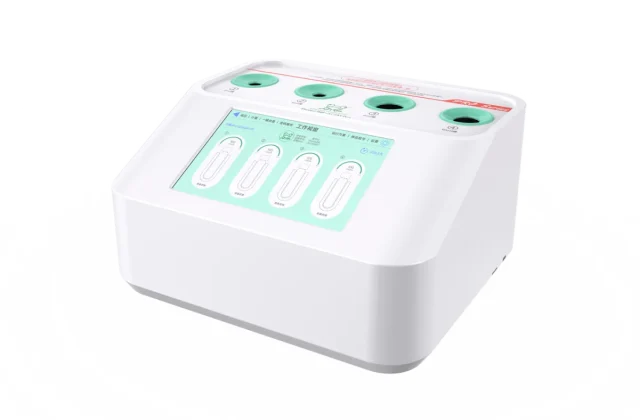
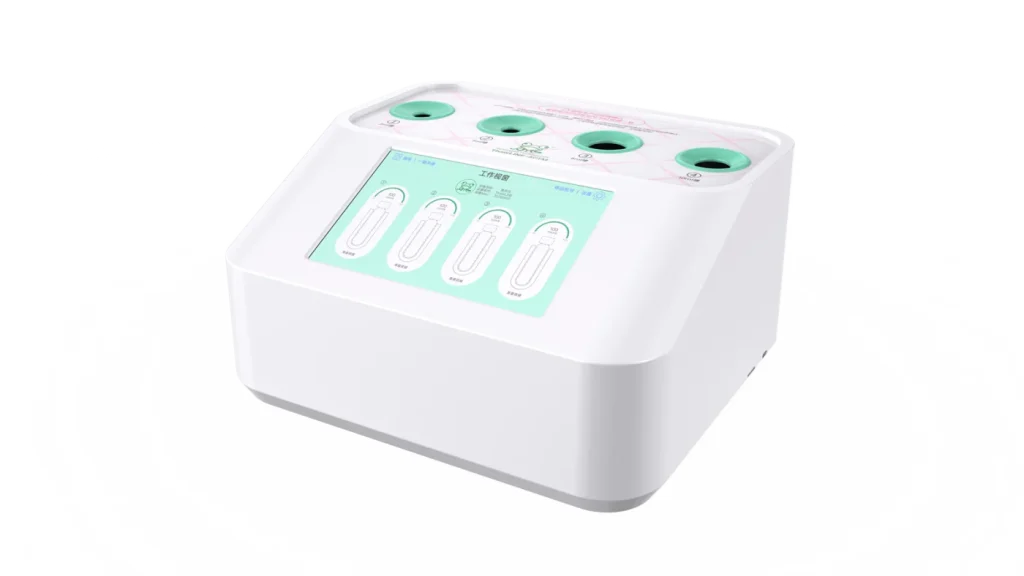
A dry thawing instrument contributes two of the five controls:
- Residual-ice target — ends the run at the point the protocol specifies (5 %–15 % recommended), instead of at full melt.
- Protection temperature (-40 °C to 0 °C) — refuses to start if the sample arrives too warm, which catches the "sat on the bench" case before it becomes a viability result.
A third, indirect benefit is the record: the run duration and input temperature are written down, so when viability drops you can see whether the thaw changed.
What the instrument cannot do is dilute the sample or centrifuge it. Those remain operator steps, and they are where the exposure time is actually decided.
A note on containers
Bag workflows have an extra risk: dilution through a line can be faster than the validated drop rate. If the bag is diluted through tubing, the flow rate — not the operator’s hand — sets the exposure curve, so the pump setting belongs in the SOP with the same weight as the thaw temperature.
For vial workflows the risk is the opposite: hand dilution is slow and variable, so two operators can produce two different exposure times from the same protocol.
How to tell whether DMSO is your problem
Three observations point at exposure rather than freezing:
- viability is acceptable immediately after thaw but falls by the first count after dilution;
- the drop correlates with how busy the lab was that day;
- the same batch frozen in two aliquots thaws differently depending on who processed it.
If any of those fit, fix timing before changing the freezing protocol. The post-thaw troubleshooting table ranks dilution timing first for exactly this reason.
Where to start
Write the five numbers into the batch record — time out of storage, time into the instrument, run duration, time to dilution, viability — and the exposure problem becomes visible within a few batches. If you need the thaw timing to be repeatable rather than operator-dependent, a unit with a stored protocol and a residual-ice target such as ThawLINE Pro removes two variables; the PBMC thawing protocol shows the same sequence for a specific cell type.
If you want the settings checked against your DMSO concentration and container, send us the details and we will reply with a parameter sheet.
<!– Facts: residual ice 5-15%, protection temp -40~0 C, ThawLINE Pro stored protocols from English brochures and knowledge base entity pages (2026-10-22); DMSO concentration range given as typical practice with the validated recipe as the authority; no viability percentages claimed. –>