"Automated thawing saves operator time" is true but unhelpful, because the thaw itself is only a few minutes. The saving, when it exists, comes from three other places: the waiting around the thaw, the rework when a thaw goes wrong, and the documentation that a manual thaw never produced.
This note gives a framework you can fill in with your own numbers. It deliberately does not quote a payback period, because the answer depends on your batch size and your labour cost.
Where the time actually goes
For a manual water-bath thaw, the operator’s involvement is roughly:
| Activity | Typical manual time | Automated time |
|---|---|---|
| Set up bath, check temperature | 5–10 min per session | 0 (pre-heat is scheduled) |
| Watch the vial, shake, check for ice | 2–5 min per sample, hands-on | 0 (runs unattended) |
| Remove and wipe | 1–2 min per sample | seconds |
| Clean bath / change water | 10–20 min per week | 30 s ozone between samples |
| Write the record | 2–5 min per batch, if done at all | automatic print or export |
The middle row is the one people underestimate. A water bath does not tell you when the sample is done, so the operator stands there and watches. That is not two minutes of work; it is two minutes of attention plus the context switch of coming back to the bench.
The consistency cost
Manual thawing produces a distribution, not a number. Two operators, two hold times, two water levels, two outcomes. The cost of that variance is not visible in the labour line; it shows up as:
- repeat runs when viability falls below the threshold;
- investigations that consume a scientist’s day;
- batch rejections in a regulated process.
Automation reduces variance by removing the operator from the timing decision: the run ends at the residual-ice target, not when someone notices. That is the argument that usually survives a cost review, because it converts an invisible cost into a visible one.
The documentation cost
A manual thaw record is a notebook line. An automated thaw produces a run record with start, finish, duration, input temperature and operator — and on the compliance-grade instruments, a printed ten-field report.
If your process is audited, the documentation saving is real: assembling a manual record for a batch review takes minutes to hours; exporting a run record takes seconds. If your process is not audited, this line is zero, and the case for automation rests on labour and consistency alone.
A calculation you can fill in
Use annual figures:
annual manual cost =
    (hands-on minutes per sample × samples per year
     + waiting minutes per batch × batches per year
     + rework runs per year × cost per rerun
     + documentation hours per year × loaded hourly rate) / 60 × rate
Then subtract the automated equivalent: essentially the loading/unloading time plus a share of the instrument’s annual cost (service, calibration, consumables).
Three inputs decide the answer:
- samples per year — below a few hundred, the labour line rarely justifies the purchase on its own;
- cost per rerun — includes the sample, the reagents and the scientist’s time; in cell therapy this dominates;
- audit exposure — whether a missing record has a cost in your environment.
If samples are few and nothing is audited, a compact dry unit such as ThawHome is still worth considering for contamination reasons, but the ROI argument is weak. If samples are many or the record matters, the calculation usually turns positive quickly.
Where automation does not help
- Dilution and centrifugation remain manual or semi-manual. An automated thaw does not shorten them.
- Sample retrieval still takes the same time; only the thaw step changes.
- A bad SOP stays bad. Automating a protocol that dilutes late will produce consistent late dilution.
The honest framing is that automation removes three specific failure modes — inconsistent timing, contamination from shared water, and missing records — and leaves the rest of the workflow untouched.
Matching the instrument to the workload
| Workload | Reasonable choice |
|---|---|
| Research, tens of samples per week, no audit | Compact dry unit (ThawHome AB: A ≤2 min, B ≤3 min, 120 W) |
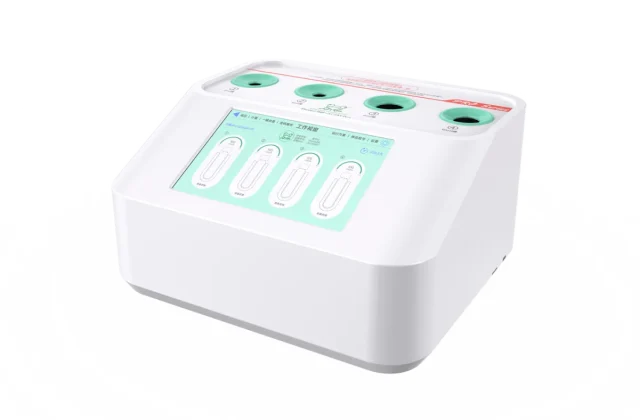
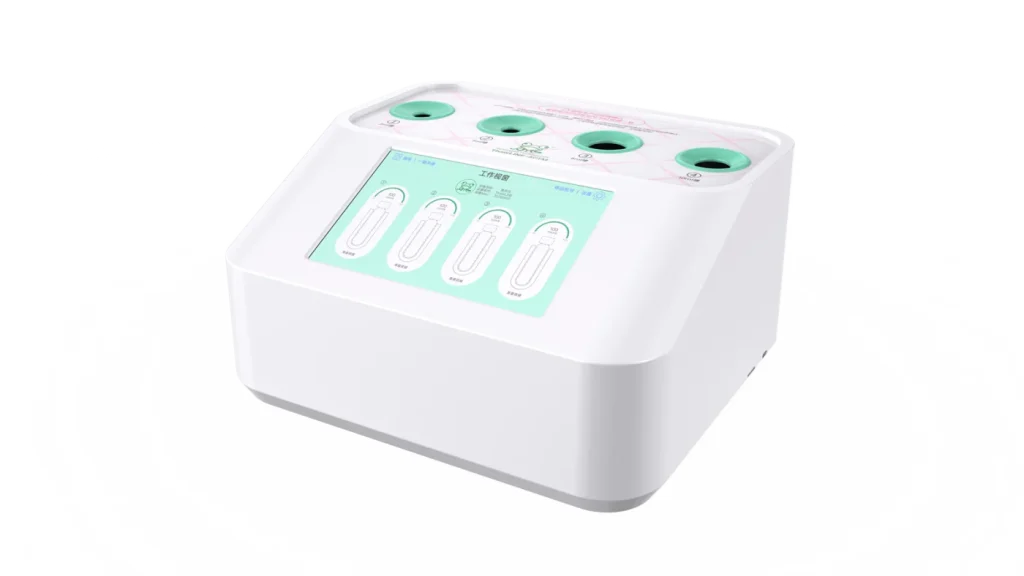
| Several operators, hundreds of samples, records needed | Four-channel unit with stored protocols (ThawLINE: 2–8 min, two access levels) |
| Regulated process, printed record, role separation | Compliance-grade unit (ThawLINE Pro: four 2 ml slots, ≤3 min, three access levels, ten-field report) |
| Bag volumes 30–450 ml | Bag system with capacity ranges (ThawWaker) |
The step from "dry" to "documented" is the one that changes the price most, and it is driven by whether the thaw is part of a batch record — not by sample count.
What to measure before and after
If you want to prove the change rather than assert it, record these for one month before and one month after:
- hands-on minutes per batch;
- waiting minutes per batch;
- runs repeated for viability;
- time spent assembling thaw records;
- contamination or deviation events.
Four weeks of data is usually enough to see whether the case is labour, consistency or documentation. It also gives you the numbers for the purchase justification, which is often harder to write than the business case itself.
If you send us your sample volume and audit exposure, we will map it to the instrument class rather than the top of the range: request a quote. The selection guide lists the seven specifications that drive the price, and the validation note covers what the documented step requires.
<!– Facts: ThawHome AB A<=2 min / B<=3 min / 120 W; ThawLINE 2-8 min / two access levels; ThawLINE Pro 4×2 ml / <=3 min / three tiers / ten-field report; ThawWaker 30-450 ml from English brochures and knowledge base entity pages (2026-10-22). Labour figures are stated as typical estimates, not supplier claims. –>